Southeast Texas Area 67 · General Service
The general-service link between the A.A. groups of Southeast Texas and Alcoholics Anonymous as a whole.
Alcoholics Anonymous is a fellowship of people who share their experience, strength and hope so that they may solve their common problem and help others recover.
A.A. has no central government — every group is autonomous — yet the groups choose to work together so the hand of A.A. is there whenever someone reaches out. That cooperation is what a general-service area is for.
Southeast Texas Area 67 gathers the A.A. groups of our corner of Texas — 18 districts (13 English-speaking and 5 Spanish-speaking), in A.A.’s Southwest Region — and connects them to Alcoholics Anonymous as a whole. The Area has one purpose: to help the groups carry A.A.’s message to the alcoholic who still suffers.
An upside-down triangle: the groups sit on top, and everything below exists to serve them. Authority flows up from the group conscience; service flows down.
Every A.A. group elects a General Service Representative (G.S.R.) to be its voice in service.
Nearby groups form a district. A District Committee Member (D.C.M.) carries the district’s conscience to the Area.
D.C.M.s, Area officers and committee chairs meet and hold Assemblies, where the group conscience of Southeast Texas is expressed.
The Area elects a Delegate who carries our conscience to the annual General Service Conference, which advises A.A. worldwide.
“Our leaders are but trusted servants; they do not govern.” — A.A. Tradition Two
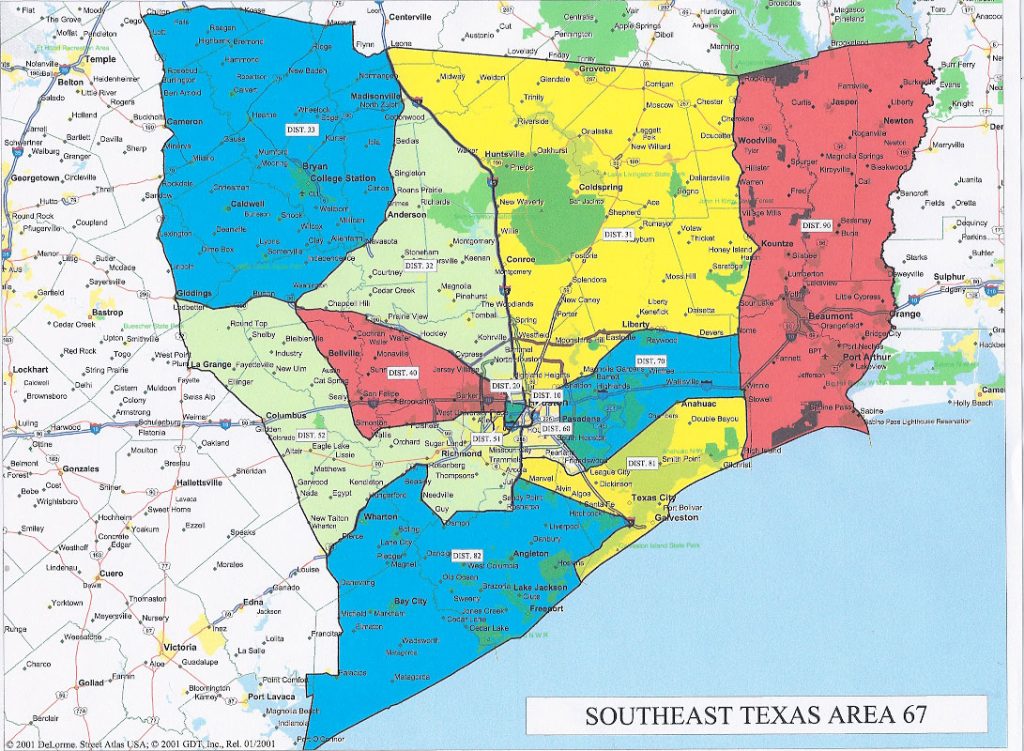
Area 67 reaches the Gulf Coast and its neighbors — from the Houston metro to Beaumont, Galveston and Bryan–College Station — organized into local districts so service stays close to the groups.
Between Assemblies the work of the Area is carried by its standing committees — trusted servants who take A.A.’s message where the groups alone can’t always reach:
A.A. service rotates. Trusted servants serve two-year terms, or “panels,” so responsibility is shared and passed along, and no one carries it too long. You don’t need to be an expert — willingness is enough, and the way in is through your home group and your district.